

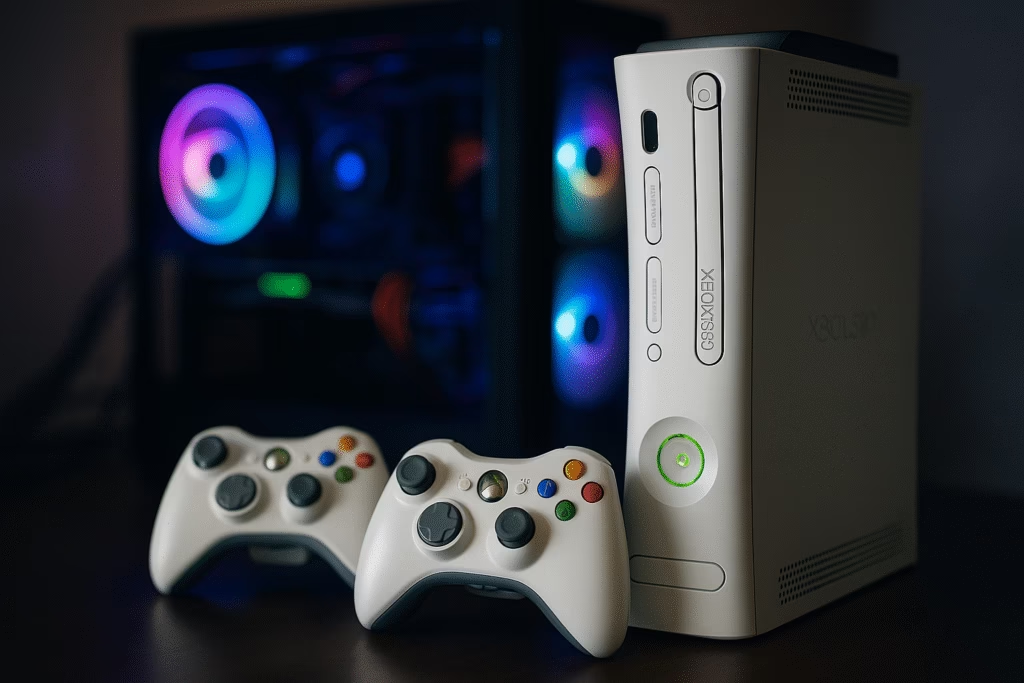
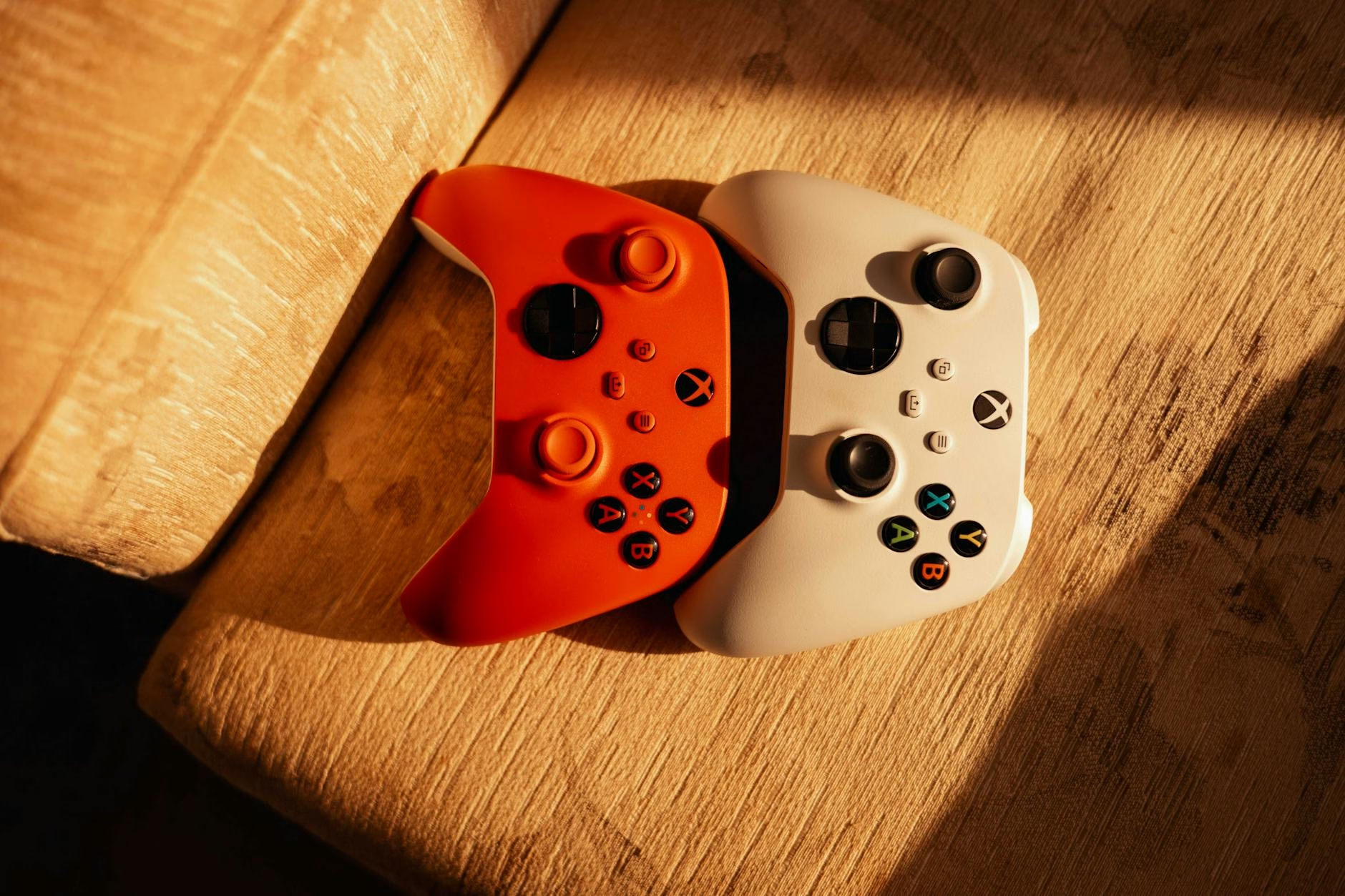

The standard Xbox Wireless Controller is widely considered a masterpiece of ergonomic design. However, as gaming evolves into a more competitive and specialized landscape, many players are beginning to wonder if the stock peripheral is truly the best tool for the job. If you have been browsing for Xbox controller alternatives, you have likely encountered a massive spectrum of options, ranging from budget-friendly replacements to “pro” rigs that cost more than the console itself.
The burning question remains: are 3rd party controllers worth it, or are you simply paying for flashy lights and gimmicks? The truth is that for many gamers, the right third-party controller isn’t just an alternative; it is a significant upgrade that can fundamentally change how you play.
Table of Contents
- The Engineering Gap: First-Party vs. Third-Party
- Why Gamers Are Looking for Alternatives
- The Rise of Hall Effect Technology
- Wired vs. Wireless: The Latency Reality
- Features That Matter: Back Buttons and Trigger Stops
- Budget Alternatives: Saving Money Without Sacrificing Fun
- High-End Pro Alternatives: The Competitive Edge
- Durability and Longevity: The Stick Drift Problem
- Frequently Asked Questions (FAQs)
- Conclusion
The Engineering Gap: First-Party vs. Third-Party
For years, the phrase “third-party controller” was synonymous with “cheap.” We all remember the “player two” controller—the translucent, rattling plastic device that felt like it would shatter if you squeezed it too hard. However, the industry has undergone a massive shift. Brands like Razer, Turtle Beach, and Victrix are now engineering peripherals that exceed Microsoft’s own build quality in specific areas.
The primary difference lies in the design philosophy. Microsoft must design a controller that appeals to everyone, from a five-year-old playing Minecraft to a grandfather playing Flight Simulator. In contrast, Xbox controller alternatives are often purpose-built. Some are designed specifically for fighting games, featuring mechanical micro-switch buttons, while others are built for first-person shooters, emphasizing lightning-fast trigger response. This specialization is exactly why third-party options have become so formidable in the current market.
Why Gamers Are Looking for Alternatives
There are several driving factors behind the search for Xbox controller alternatives. For many, the most significant issue is “Stick Drift.” Standard Xbox controllers use potentiometer-based thumbsticks that eventually wear down, causing your character to move on their own. This mechanical failure has pushed frustrated gamers toward third-party manufacturers who offer more durable solutions.
Another factor is ergonomics. While the offset-stick layout of the Xbox controller is iconic, it isn’t perfect for everyone. Some gamers find the shell too small, while others want more weight for a premium feel. Furthermore, the lack of back paddles on the standard controller is a major disadvantage in competitive titles like Call of Duty or Apex Legends. Third-party controllers often include these paddles as a standard feature, allowing you to jump, slide, or reload without ever taking your thumbs off the sticks.
The Rise of Hall Effect Technology
If you are tired of replacing your controller every year, you need to understand Hall Effect technology. This is perhaps the biggest reason why Xbox controller alternatives are currently winning the hearts of hardcore gamers. Unlike standard sticks that use physical contact to measure movement, Hall Effect sticks use magnets and electrical sensors.
Because there is no physical friction, these sticks are virtually immune to stick drift. Brands like Gamesir have pioneered this tech in the Xbox space. The GameSir G7 SE Wired Controller is a perfect example of an affordable alternative that features Hall Effect sticks, giving it a lifespan that far outlasts the official Microsoft version. This technological leap has made third-party options not just a viable choice, but the more logical one for long-term value.
Wired vs. Wireless: The Latency Reality
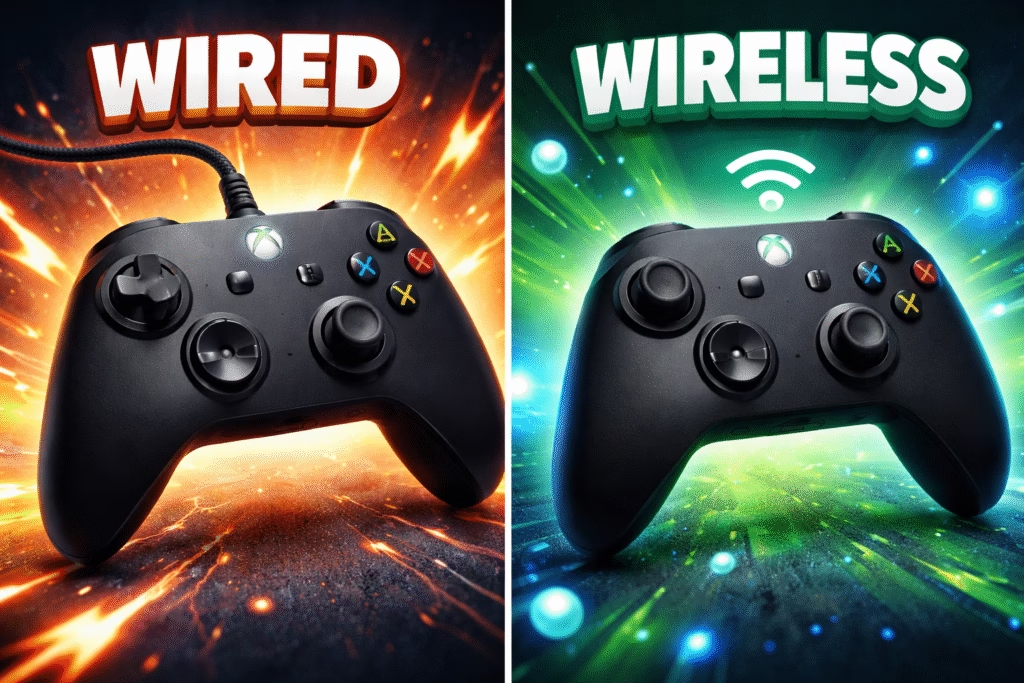
One of the biggest trade-offs you will encounter when looking at Xbox controller alternatives is the cord. Microsoft keeps a very tight grip on its proprietary wireless protocol. Consequently, many high-performance third-party controllers are strictly wired. While this might seem like a step backward, it offers two distinct advantages: zero latency and no batteries.
In competitive gaming, every millisecond counts. A wired connection eliminates the tiny amount of input lag inherent in wireless signals. Furthermore, you never have to worry about your controller dying in the middle of a boss fight. If you can handle a cable running across your living room, you can often get a controller with “Pro” features for half the price of a wireless model.
Features That Matter: Back Buttons and Trigger Stops
When deciding if Xbox controller alternatives are worth it, you must look at the “Quality of Life” features.
- Back Buttons/Paddles: These allow for “claw-free” gaming. Mapping your face buttons (A, B, X, Y) to the back means your thumbs stay on the sticks for aiming.
- Trigger Stops: These are physical switches that shorten the pull distance of your triggers. Instead of a full squeeze, the trigger clicks like a mouse, allowing you to fire semi-automatic weapons significantly faster.
- Mechanical Buttons: Many third-party controllers use mouse-click switches for the D-pad and face buttons, providing tactile feedback that a rubber membrane simply cannot match.
To protect your investment and keep your setup organized, especially with these feature-rich devices, a Universal Controller Stand by OIVO is a simple but effective way to display your gear and prevent accidental drops that could damage sensitive paddles.
Budget Alternatives: Saving Money Without Sacrificing Fun
You do not need to spend $200 to find great Xbox controller alternatives. Companies like PowerA have mastered the entry-level market. Their controllers are officially licensed by Xbox, meaning they work perfectly with the console and PC right out of the box.
While these budget models might feel slightly lighter or “plasticky” compared to the original, they often include two mappable back buttons—a feature Microsoft only offers on the $180 Elite Series 2. For families with children or casual gamers who just need an extra pad for couch co-op, these budget alternatives provide incredible value and reliable performance.
High-End Pro Alternatives: The Competitive Edge
On the other end of the spectrum, we have the “Elite” killers. These are the controllers designed for professional esports athletes. Brands like Razer and Victrix focus on extreme customization. For example, the Razer Wolverine V2 Chroma offers additional “shoulder” buttons next to the bumpers and interchangeable thumbstick caps.
These high-end Xbox controller alternatives also come with sophisticated software. You can adjust dead zones, vibration intensity, and RGB lighting profiles. While the price tag is steep, the level of precision and durability often justifies the cost for those who spend 20+ hours a week gaming. The tactile feedback of mechanical switches alone can drastically improve your timing in fast-paced action games.
Durability and Longevity: The Stick Drift Problem

As mentioned previously, the longevity of a controller is its most important trait. Many third-party manufacturers are now using reinforced plastic and higher-rated switches to combat the “disposable” nature of modern tech. When evaluating Xbox controller alternatives, always check the “polling rate.” A higher polling rate (like 1000Hz) means the controller reports its position to the console more frequently, resulting in smoother, more responsive movement.
Furthermore, some third-party controllers allow for modular replacements. If a stick fails, you can simply pop out the module and replace it for $20 rather than buying a whole new $70 controller. This modularity is a hallmark of sustainability that the standard first-party controller lacks.
Frequently Asked Questions (FAQs)
1. Are 3rd party controllers compatible with all Xbox consoles?
Most Xbox controller alternatives designed for Xbox Series X|S are backward compatible with Xbox One. However, always check the “Officially Licensed” badge on the packaging.
2. Why are most 3rd party Xbox controllers wired?
Microsoft uses a proprietary wireless chip. To keep costs down or focus on performance (latency), many manufacturers opt for a wired connection instead of paying for the wireless license.
3. Do 3rd party controllers have a headphone jack?
Yes, almost all modern third-party alternatives include a 3.5mm jack for your gaming headset, and some even include built-in audio controls for volume and chat mix.
4. Will a 3rd party controller work on my PC?
Yes. Since Xbox and Windows are both Microsoft ecosystems, almost every Xbox-compatible controller is “plug-and-play” on a PC.
5. Are “Hall Effect” sticks really better?
Absolutely. Because they use magnets instead of physical friction, they are far more resistant to wear and tear, effectively eliminating the risk of stick drift.
6. Can I remap the buttons on a 3rd party controller?
Most offer remapping. Budget models usually have a physical “program” button, while high-end models use a dedicated app on the Xbox or PC.
7. Do they support haptic feedback and rumble?
Licensed controllers do support rumble, though the quality of the “haptic” feel may vary from the official Microsoft “Impulse Triggers.”
8. Are third-party controllers allowed in tournaments?
Generally, yes, as long as they do not have “macro” functions (which automate multiple button presses). Most pro gamers actually prefer third-party “Pro” controllers.
9. Why should I buy a 3rd party controller instead of an Xbox Elite Series 2?
While the Elite is great, it is known for reliability issues. Many third-party alternatives offer better durability, Hall Effect sticks, and lower prices.
10. Do third-party controllers come with a warranty?
Yes, reputable brands like Razer, PowerA, and Turtle Beach offer warranties ranging from 90 days to 2 years.
Conclusion
In the modern gaming era, Xbox controller alternatives are more than just “backups.” They represent a diverse market of specialized tools that can cater to your specific grip style, game preference, and budget. Whether you are looking for the indestructible nature of Hall Effect sticks, the speed of mechanical switches, or simply a more affordable way to play with friends, there is a third-party option that likely outperforms the stock controller.